The Crossover Economy: How Collabs Became the Dominant Language of Modern Gaming — and Who's Getting Left Out
If you logged into any major multiplayer game in 2026 and didn't encounter at least three different intellectual properties that had nothing to do with the base game, you probably weren't playing long enough. The crossover economy has officially become the dominant business model in modern gaming, transforming everything from battle royales to racing sims into revolving doors of licensed content that generates billions in revenue while fundamentally reshaping how we think about game identity.
The New Normal
What started as Fortnite's novel approach to content updates has metastasized into an industry-wide strategy that's impossible to ignore. Call of Duty players can now run around as anime characters from franchises they've never heard of. Racing game enthusiasts find themselves driving cars from movies that won't be released for another two years. Even traditionally single-player experiences are retrofitting multiplayer modes specifically to accommodate crossover content.
The numbers behind this shift are staggering. Industry analysts estimate that crossover content now generates more revenue than traditional DLC across major live-service titles, with some publishers reporting that collaboration events drive higher engagement than new map releases or gameplay updates. For many players, the question isn't whether their favorite game will get crossover content — it's which IP will show up next.
But this transformation comes with costs that extend far beyond individual purchase decisions. The crossover economy is creating new forms of digital stratification, where access to cultural references becomes a form of social currency that not everyone can afford to participate in.
The FOMO Machine
Crossover events excel at one thing above all others: creating urgent desire for things players didn't know they wanted. The limited-time nature of most collaborations transforms every announcement into a countdown timer, where the fear of missing out drives purchasing decisions that players might never make under normal circumstances.
This isn't accidental. Publishers have refined crossover timing to maximize what they call "impulse conversion" — the moment when a player's desire to own a piece of content outweighs their rational evaluation of its value. Limited availability windows, exclusive variants, and social pressure from seeing other players with crossover items all contribute to an ecosystem designed to bypass traditional purchase consideration.
The psychological impact extends beyond individual spending. Players report feeling like their game libraries are constantly incomplete, as new collaborations make previous content feel outdated or irrelevant. The crossover economy doesn't just sell products — it sells the anxiety of being left behind.
Cultural Capital and Digital Divides
Perhaps the most troubling aspect of the crossover economy is how it's creating new forms of cultural gatekeeping within gaming communities. Players who can afford to participate in every collaboration event accumulate what sociologists call "cultural capital" — the ability to understand and reference the growing web of IP connections that increasingly define multiplayer social spaces.
This creates a tiered system where players who can't or won't engage with crossover content find themselves excluded from conversations, references, and even basic social recognition within their own gaming communities. The shared language of multiplayer spaces is increasingly defined by commercial transactions rather than gameplay experiences.
The impact is particularly pronounced among younger players, who report feeling pressure to participate in collaborations not because they're interested in the content, but because exclusion from crossover culture means exclusion from peer groups. Gaming, which once offered escape from economic pressures, now reproduces them in digital form.
The Creative Compromise
While crossover events generate impressive revenue, they're also fundamentally altering how games approach world-building and narrative coherence. Developers must now design game universes flexible enough to accommodate any IP collaboration that might generate revenue, leading to increasingly generic settings that can absorb external content without breaking immersion.
This has led to what critics call "IP agnosticism" — games designed to be compatible with any brand partnership rather than expressing a distinctive creative vision. The most successful crossover platforms are often the most aesthetically neutral, creating environments where Master Chief can fight alongside Goku without either character feeling out of place.
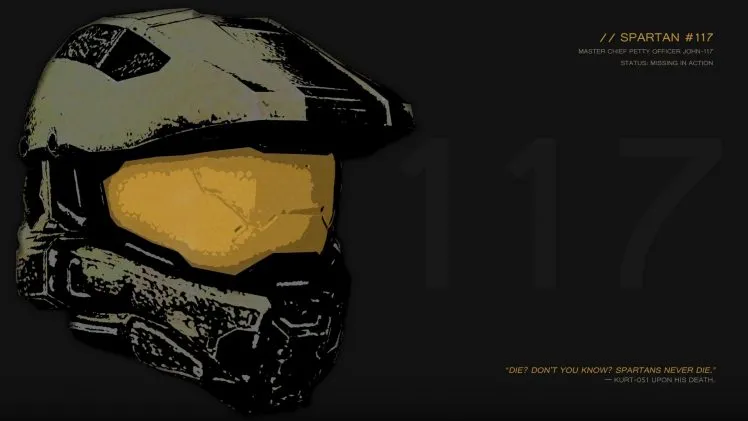 Photo: Master Chief, via wallup.net
The long-term creative cost of this approach is becoming apparent as games lose their distinctive identities in favor of crossover compatibility. Players struggle to form emotional attachments to game worlds that feel more like advertising platforms than creative expressions.
The Algorithm of Relevance
Crossover selection isn't random — it's driven by sophisticated algorithms that analyze player demographics, spending patterns, and cultural trends to identify the most profitable collaboration opportunities. This data-driven approach to cultural mixing creates its own distortions, where IP partnerships reflect algorithmic assumptions about player interests rather than actual community desires.
The result is a feedback loop where crossover content shapes player expectations, which in turn influences future collaboration decisions. Games become mirrors of their own data, reflecting back algorithmic interpretations of what players want rather than exploring new creative possibilities.
This process also tends to favor established, recognizable IP over emerging or niche properties, creating a crossover economy that reinforces existing cultural hierarchies rather than challenging them.
The Sustainability Question
As the crossover economy matures, questions about its long-term sustainability are becoming impossible to ignore. The constant need for new collaboration content is straining both development resources and player attention spans. Publishers report diminishing returns on crossover investments as audiences become increasingly difficult to surprise or excite.
More concerning is the growing disconnect between crossover content and core gameplay experiences. Players increasingly view collaboration events as separate from the games that host them, leading to engagement patterns that bypass rather than enhance the base experience.
The most successful games of 2026 are beginning to recognize that crossover content works best when it enhances rather than replaces core gameplay loops. The future of the crossover economy may depend on finding ways to integrate collaboration content that strengthens rather than dilutes game identity.
Finding Balance
The crossover economy isn't inherently problematic — at its best, it can introduce players to new franchises, fund ongoing development, and create genuinely exciting moments of cultural collision. But its current implementation often prioritizes short-term revenue over long-term community health and creative integrity.
The games that will thrive in this environment are those that approach crossovers strategically rather than opportunistically, using collaboration content to enhance their core experience rather than replace it. The crossover economy works best when it serves the game, not the other way around.