When The Last of Us Part II launched in 2020, it set a new gold standard for video game accessibility. Over 60 different options covered everything from audio cues for blind players to button remapping for those with motor disabilities. The game didn't just win awards — it proved that inclusive design could expand audiences without compromising artistic vision.
Six years later, you'd expect that lesson to have spread throughout the industry. Instead, our analysis of 2026's biggest releases reveals a troubling pattern: despite vocal advocacy, proven business benefits, and increasingly sophisticated development tools, major studios are still treating accessibility as an afterthought.
The 2026 Accessibility Scorecard
Critical Rollout partnered with accessibility advocacy group AbleGamers to evaluate the top 50 game releases of 2026 across key accessibility categories. The results are sobering:
Colorblind Support: Only 34% of releases include comprehensive colorblind accessibility options, down from 41% in 2025. Major offenders include Street Fighter 7, which uses red and green health bars with no alternative visual indicators, and Madden NFL 27, which relies entirely on team colors for play recognition.
Subtitle Customization: 58% of games offer basic subtitles, but only 23% include speaker identification, sound effect descriptions, or customizable text sizing — features that make dialogue accessible to deaf and hard-of-hearing players.
Motor Accessibility: Just 31% of releases include comprehensive button remapping, and only 18% offer hold-to-toggle conversions or adjustable timing windows for quick-time events.
Cognitive Accessibility: The most neglected category, with only 12% of games offering features like objective reminders, simplified UI modes, or pause-anywhere functionality.
Perhaps most damning: 73% of games that include accessibility options bury them in sub-menus or fail to explain what each setting actually does, making them effectively invisible to players who need them most.
The Studios Getting It Right
Not every developer is failing this test. Several 2026 releases demonstrate that comprehensive accessibility doesn't require sacrificing design ambition or inflating budgets.
Insomniac Games continues to lead the pack with Spider-Man 3, featuring over 50 accessibility options including audio navigation for blind players, one-button traversal modes, and visual indicators for all audio cues. The studio employs two full-time accessibility consultants and conducts regular playtests with disabled gamers throughout development.
Guerrilla Games made Horizon Call of the Mountain fully playable without VR motion controllers, recognizing that many disabled players can't use traditional VR input methods. The game includes seated play options, eye-tracking support, and customizable gesture sensitivity.
Naughty Dog expanded on their Last of Us work with The Last of Us Part III, adding new features like AI-assisted navigation for players with cognitive disabilities and haptic feedback patterns that convey environmental information through controller vibration.
These studios share common practices: they involve disabled gamers in the design process from day one, treat accessibility as a core feature rather than post-launch addition, and allocate specific budget and personnel to inclusive design.
The Business Case for Inclusion
The economic argument for accessibility is overwhelming. The CDC estimates that 13.7% of US adults have a disability, representing roughly 45 million potential customers. More importantly, accessible design benefits everyone — subtitles help players in noisy environments, button remapping aids anyone with hand injuries, and clear visual design reduces eye strain for all users.
Forza Horizon 5 saw a 23% increase in player retention after adding comprehensive accessibility options, including blind driving assists and customizable difficulty modifiers. Microsoft Flight Simulator expanded its audience by 31% when it introduced simplified control schemes and visual flying aids.
"Accessibility isn't charity," says Steve Spohn, COO of AbleGamers. "It's smart business. Every barrier you remove opens your game to more players, and those players become some of your most loyal advocates."
Yet many studios still view accessibility as a compliance checkbox rather than a design opportunity. This mindset leads to the bare-minimum implementations we see in too many 2026 releases.
The Real-World Impact
Behind these statistics are real people being excluded from cultural experiences that define modern entertainment. Marcus Rodriguez, a 28-year-old gamer from Phoenix who has been legally blind since birth, describes the frustration of wanting to play Elden Ring but being unable to navigate its world without visual cues.
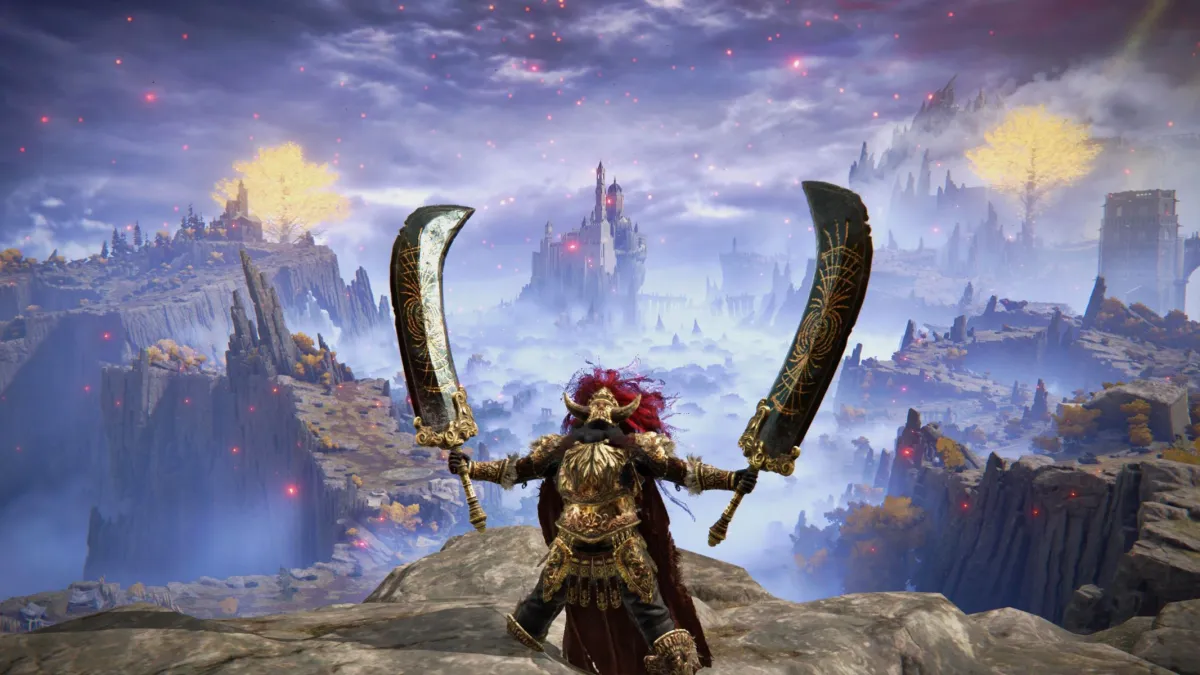 Photo: Elden Ring, via doquizzes.com
"I can handle difficult games," Rodriguez explains. "I've beaten every Souls game using audio cues and muscle memory. But Elden Ring's open world design relies so heavily on visual exploration that I'm completely lost. Simple audio pings for nearby items or spoken descriptions of environmental features would make it playable, but those features just aren't there."
Similarly, Sarah Chen, who has rheumatoid arthritis that affects her hand mobility, finds herself locked out of games with rigid control schemes. "I can play for maybe 30 minutes before my hands start hurting, but games like Street Fighter 7 require complex button combinations that I physically can't perform. Button remapping and simplified input options would let me play competitively, but most fighting games still don't include them."
These aren't edge cases — they represent millions of potential players who want to engage with games but can't due to preventable design barriers.
The Technical Reality
Developers often cite technical limitations or budget constraints when explaining absent accessibility features, but industry experts dispute these excuses. Modern game engines include built-in accessibility tools, and many features require minimal additional development time when implemented from the start.
"The hardest part about accessibility is remembering to do it," says Ian Hamilton, an accessibility consultant who has worked with over 200 game studios. "Most accessibility features are simple to implement if you plan for them early. The problems arise when studios try to retrofit accessibility after the core game is finished."
Unity and Unreal Engine both include accessibility frameworks that handle common features like colorblind support and subtitle systems. Microsoft's Game Accessibility Guidelines provide free, comprehensive implementation advice. The tools exist — what's missing is institutional commitment.
Platform Holders Step Up
Interestingly, the biggest improvements in 2026 accessibility have come from platform holders rather than individual developers. Sony's PS5 system-level accessibility features include system-wide button remapping, zoom functionality, and text-to-speech for all games. Microsoft's Xbox Accessibility Guidelines have become industry standard, and the company requires compliance for Game Pass inclusion.
Nintendo, historically the laggard in accessibility, surprised everyone with comprehensive accessibility options in the Switch 2 OS, including customizable control schemes and visual accessibility settings that work across all games.
These system-level improvements help, but they can't substitute for game-specific accessibility design. A racing game needs different accommodations than a puzzle platformer, and generic solutions often create new barriers while solving others.
The Path Forward
The solution isn't complex — it's cultural. Studios need to treat accessibility as a core design principle rather than a post-launch add-on. This means:
- Including disabled gamers in playtesting from early development stages
- Allocating specific budget and personnel to accessibility implementation
- Training development teams on inclusive design principles
- Partnering with accessibility organizations for guidance and feedback
Some progress is happening organically. The Game Accessibility Conference has grown from 200 attendees in 2020 to over 2,000 in 2026. Major publishers like EA and Activision have hired dedicated accessibility teams. Industry recognition programs like the Game Awards' "Excellence in Accessibility" category are raising awareness.
But voluntary adoption isn't enough. The European Union's Web Accessibility Directive already covers some digital products, and similar regulations may eventually extend to games. Rather than wait for mandates, smart studios should view accessibility as a competitive advantage.
Beyond Compliance
The best accessibility implementations go beyond meeting minimum requirements to create genuinely inclusive experiences. The Last of Us Part II didn't just add audio cues for blind players — it redesigned core gameplay systems to work without vision. Forza Horizon 5 didn't just include driving assists — it created entirely new ways to experience racing that work for players with various disabilities.
This is the difference between accessibility as compliance and accessibility as design philosophy. One checks boxes; the other creates better games for everyone.
The gaming industry has spent decades perfecting the technical craft of game development. Graphics are photorealistic, physics are convincing, and online systems connect millions of players seamlessly. But we've somehow failed to master the basic principle that games should be playable by the people who want to play them.
In 2026, excluding disabled players isn't just morally questionable — it's bad business, bad design, and increasingly inexcusable given the available tools and knowledge. The studios getting accessibility right aren't just doing good; they're demonstrating what the future of inclusive game design looks like.
The question isn't whether the industry can build accessible games. The question is whether it will choose to.
 Photo: Eiffel Tower, via wallpapercave.com