Pretty at What Cost? The Ray-Tracing Arms Race Is Breaking the Games Underneath the Visuals
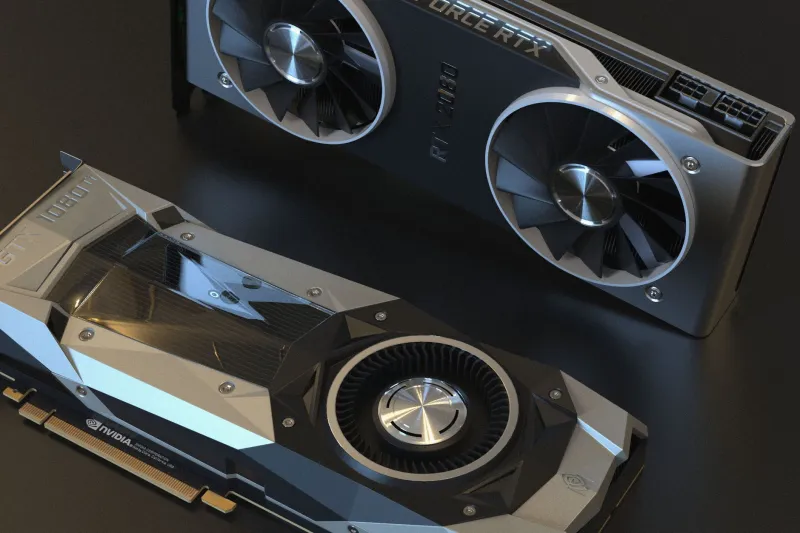
Let me paint you a picture — pun fully intended. You boot up one of 2026's most technically ambitious releases. The lighting is staggering. Reflections pool across wet pavement with the kind of fidelity that makes you stop and stare. Every surface behaves like it understands physics. Screenshots from this game are genuinely stunning, the kind that get passed around as evidence that we've finally arrived somewhere meaningful in the long march toward photorealism.
Then you start playing. And something feels off.
The frame rate is inconsistent in ways that interrupt your rhythm. The world, for all its visual grandeur, feels oddly inert — like a film set rather than a place. The design of the levels themselves is strangely conservative, constrained in ways that don't make sense until you realize that more visual complexity means more rendering cost, and more rendering cost means less room for the kinds of dynamic, unpredictable spaces that make games actually interesting to navigate. The visuals are doing everything right. The game underneath them is quietly suffocating.
This is the performance trap. And in 2026, it's catching more developers than ever.
The Benchmark Obsession
Ray-tracing — the technique that simulates how light actually bounces and behaves in physical space — is genuinely impressive technology. Nobody serious is arguing otherwise. The problem isn't the technology. The problem is what happens when chasing that technology becomes the organizing principle of a game's development rather than one tool among many.
The pressure to ship with ray-tracing enabled, to hit the graphical benchmarks that generate the kind of coverage and YouTube footage that drives pre-orders, has become enormous. Hardware manufacturers market it aggressively. Platform holders use it as a selling point for console generations. Reviewers — and this is a moment for some industry self-reflection — have historically rewarded it in ways that inflate its importance relative to what it actually contributes to the experience of playing a game.
The result is that development teams are allocating massive portions of their computational budget, their engineering hours, and their artistic pipeline to a feature that most players will interact with primarily by not noticing it. Ray-traced global illumination is most impressive when you're looking for it. When you're actually playing, you're looking at something else entirely.
What Gets Sacrificed
Here's what the benchmarks don't capture: the design decisions that get quietly abandoned because they're too expensive to render beautifully.
Talk to developers — not on the record, because the marketing machine around graphical fidelity is ferociously protective — and a consistent picture emerges. Level design scope gets constrained by rendering budgets. Enemy counts in open environments get capped. Weather systems, dynamic destruction, and emergent simulation get deprioritized because the GPU cycles are already spoken for. The game's systemic ambition shrinks to fit inside the visual ambition.
This is the part that should concern players more than it does. We've collectively been trained to evaluate games on visual terms first, and the industry has learned to optimize for that evaluation. But the things that make games worth playing for more than a few hours — density of interesting decisions, systemic depth, environmental reactivity, the sense that the world has rules you can learn and exploit — those things require computational resources too. When the lighting takes priority, something else pays the price.
Art direction is another casualty that doesn't get discussed enough. Some of the most visually distinctive and enduring games of the last decade succeeded precisely because they weren't trying to simulate reality — they were doing something else entirely. A strong art direction creates a visual language that's immediately recognizable and ages gracefully. Photorealism, by contrast, is always in a race against the next hardware generation. The games chasing the most technically accurate lighting in 2026 will look dated in five years in a way that a game with strong stylized art direction simply won't.
The Games Getting It Right
The most interesting visual conversation in games right now isn't happening at the high end of the fidelity spectrum. It's happening in the middle, and in the deliberately stylized corners of the market where developers have made a conscious choice to invest their resources in something other than photorealism.
2026 has already produced several releases that demonstrate what's possible when a team decides that aesthetic coherence matters more than benchmark scores. Games where the art direction is doing heavy lifting that no amount of ray-traced reflections could replicate — creating worlds that feel genuinely distinct, that communicate tone and atmosphere through deliberate visual choices rather than through technical muscle.
These games also, not coincidentally, tend to perform better. When you're not pushing every available GPU cycle into lighting simulation, you have room to maintain frame rates, support more dynamic systems, and build the kind of environmental density that makes a world feel alive rather than merely expensive.
The indie space has understood this for years. What's new in 2026 is that some mid-sized and even larger studios are starting to internalize it too — making the deliberate choice to define their visual identity through artistic vision rather than through hardware capability. That choice is increasingly looking like wisdom.
The Hardware Conversation Nobody Wants to Have
There's a hardware dimension to this that's worth naming directly. Ray-tracing at high fidelity is still, in 2026, a feature that performs well on a relatively narrow band of hardware. The GPU required to run a technically ambitious release at its intended visual settings and a stable frame rate represents a significant investment — one that a large portion of the PC gaming audience hasn't made and may not make for several years.
Console implementations involve their own compromises: performance modes that disable or significantly reduce ray-tracing to hit frame rate targets, quality modes that prioritize the visual showcase at the cost of the responsiveness that makes action games feel right. Players are routinely being asked to choose between a game that looks like its marketing and a game that plays like it should. That's not a great position to put your audience in.
What Needs to Change
The industry doesn't need to abandon graphical ambition. It needs to reframe what ambition means. The most technically impressive thing a development team can do in 2026 might not be achieving the most accurate light simulation — it might be building a world that's more reactive, more dynamic, and more interesting to exist inside than anything the previous hardware generation could support.
That's a harder thing to show in a four-minute reveal trailer. It's a harder thing to benchmark. But it's the thing that makes people still playing a game six months after launch.
The ray-tracing obsession isn't going to end overnight. The commercial incentives driving it are too strong, and the marketing ecosystem built around visual fidelity is too entrenched. But the games proving that the alternative works — that aesthetic ambition and technical creativity beat raw computational flex — are making a louder argument with every release.
The prettiest game in the room isn't always the one worth taking home — and in 2026, that distinction has never mattered more.