Midnight Never Comes: The Slow Death of Gaming's Greatest Ritual

Photo by Photo by Arad hg on Unsplash on Unsplash
Midnight Never Comes: The Slow Death of Gaming's Greatest Ritual
Let me paint you a picture. It's November 2011. You're standing outside a GameStop in a strip mall somewhere in suburban America. It's cold. You've been here since 9 PM. The line stretches around the corner and into the parking lot, and somewhere near the back, two guys are having a debate about whether Skyrim or Skyward Sword is going to be the better game. Someone's brought a portable speaker. Someone else has pizza. At midnight, the doors open, and for about forty-five seconds, the entire crowd loses its mind.
That was the midnight launch. It was loud, inefficient, mildly chaotic, and completely irreplaceable. And in 2026, it is essentially extinct.
How We Got Here
The midnight launch didn't die all at once. It was a slow erosion, accelerated by a handful of converging forces that each made perfect individual sense but combined to erase something genuinely irreplaceable.
Digital downloads were the first nail. Once publishers figured out that they could unlock a game simultaneously across all digital storefronts at a set time — no retail coordination required — the incentive to support a physical midnight event started to dissolve. Why manage the logistics of a thousand simultaneous store openings when you can just flip a switch on a server?
Then came the global unlock schedule. The shift to midnight Eastern, midnight Pacific, or — increasingly — a single worldwide unlock time standardized around midnight in a specific time zone fundamentally changed the experience. When Halo Infinite unlocked in 2021, players in different time zones were playing at wildly different local hours. The communal "everyone starts at the same moment" feeling, which had been central to the midnight launch's appeal, fractured into a thousand individual timezone calculations.
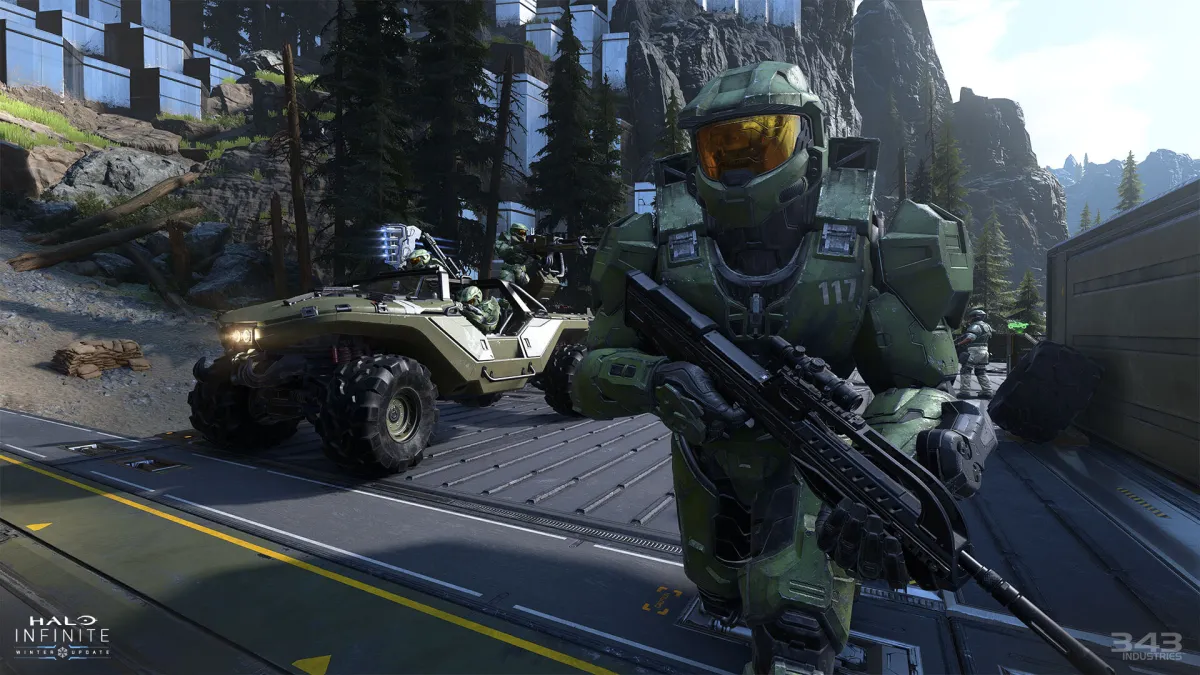 Photo: Halo Infinite, via www.gamersdecide.com
GameStop's contraction did the rest. The chain that hosted more midnight launches than any other retailer in American history has spent the better part of five years closing locations at a pace that has left many communities without a dedicated game retailer at all. The remaining stores simply don't have the staff, the floor space, or frankly the cultural cachet to pull off the kind of event that once drew hundreds of people on a Tuesday night.
What We Actually Lost
Here's where I want to push back against the instinct to shrug and say "well, progress." Because framing the death of the midnight launch as simply an efficiency improvement misses something important about what those events actually were.
They were one of the only places in American consumer culture where being a gamer was a public, social, shared identity. Not online. Not in a Discord server or a subreddit. Physically, in a parking lot, with other human beings who cared about the same thing you did.
For a lot of people — particularly younger players in communities where gaming wasn't always socially accepted — a midnight launch was the first time they experienced their hobby as something communal and celebrated rather than solitary and slightly embarrassing. You'd stand in line and talk to someone you'd never met about their favorite games, get recommendations, argue about franchises. It was the gaming convention experience compressed into a single night, available in your hometown, free to attend.
That social texture is almost impossible to replicate digitally. Yes, there are launch-night streams. Yes, there are Discord countdowns and Reddit live threads. But the fundamental difference is that online spaces are self-selecting — you're already in those communities. A midnight launch line was random. The person next to you might be a hardcore speedrunner or a parent buying a gift for their kid or someone who'd never played a game in their life until a friend dragged them out. That randomness was the whole point.
The Digital Launch Party Problem
Publishers have tried to fill the void. Launch-day streams with developers and influencers. Digital countdown events. In-game celebrations triggered at the moment of release. These aren't bad ideas, but they're fundamentally passive experiences. You watch. You don't participate. The electricity of a midnight launch came from the crowd's energy feeding back on itself, from the shared countdown and the shared moment of doors opening. A Twitch stream with a hype chat scrolling at 10,000 messages per second is not the same thing, no matter how many emotes are flying.
Some game publishers have experimented with launch events — pop-up experiences in major cities, usually tied to marketing budgets rather than genuine community building. These work as spectacle, but they're geographically exclusive in a way that midnight launches never were. A GameStop midnight launch in Tulsa, Oklahoma mattered to the people of Tulsa, Oklahoma. A launch event in downtown Los Angeles does not.
The Last Holdouts
It's not entirely gone. Nintendo has occasionally organized midnight launch events around major releases, leaning into the theatrical quality that suits its brand. Some independent game retailers — the kind that have survived precisely because they cultivated community rather than just selling product — still run launch nights that carry a ghost of the old energy.
And there's a version of the midnight launch that lives on in the console launch itself. The PS5 and Xbox Series X launches generated lines that rivaled anything from the peak GameStop era, albeit driven more by scarcity than celebration. People will still show up in the cold for something they care about. The infrastructure to channel that energy around individual game releases just isn't there anymore.
What 2026 Can Actually Offer
The honest answer is: not much that's equivalent. The conditions that made the midnight launch possible — a concentrated retail landscape, a single release moment, a culture where physical ownership was the default — don't exist in the same form anymore.
What we have instead is a more convenient, more fragmented, fundamentally more private experience of game launches. You download at midnight. You play alone, or with online friends. You share your first impressions on social media. It's fine. It's efficient. It is not, in any meaningful sense, the same thing.
The midnight launch is dead, and nobody really killed it on purpose. It was the accidental casualty of a dozen sensible decisions that individually made the industry more efficient and collectively made it a little less human.
Somewhere, a parking lot is just a parking lot again. And gaming is slightly lonelier for it.