The Skip Tax: AAA Studios Are Spending Millions on Cutscenes That Players Are Dismissing in Seconds

Photo by Photo by Oleg Brovchenko on Unsplash on Unsplash
Somewhere in a motion capture studio, an actor is performing the most emotionally precise version of a scene they've ever done. The director calls cut. The crew applauds. The performance gets handed off to an animation team, a cinematography team, a lighting team, a sound design team, a composer, a post-production supervisor, and eventually a QA department that watches the whole thing seventeen times to make sure the lip sync is right. The total cost of that scene, fully loaded across everyone who touched it, probably clears six figures without breaking a sweat.
And then a player presses a button and skips it in under three seconds.
This is the central tension of big-budget game storytelling in 2026, and the industry has been carefully avoiding a direct conversation about it for years. Studios are investing at prestige television scale in cinematic narrative — performance capture, full orchestral scores, A-list voice casts, story teams that rival the writing rooms of premium cable dramas. And player behavior data, discussed with increasing frankness at developer conferences and in post-launch analytics breakdowns, keeps telling the same uncomfortable story: a meaningful, measurable share of players are skipping cutscenes at rates that should be prompting serious questions about the return on that investment.
The Numbers Nobody Likes to Cite
Exact figures are hard to pin down because studios aren't in the habit of publishing cutscene skip rates in their quarterly reports. But the conversation has been surfacing in places where developers speak candidly — GDC talks, post-mortems, and the kind of panel discussions where the PR team isn't in the room.
What emerges from those conversations is a picture that varies significantly by genre and audience, but points toward a consistent pattern: in action-heavy games with large player bases, skip rates on individual cutscenes can run anywhere from 20 to 40 percent on first playthrough, climbing significantly higher on subsequent runs. In games with longer, more frequent cinematic sequences, the skip behavior often accelerates as the game progresses — players who engaged with early story content increasingly check out as the runtime extends.
Game developers discussing analytics at GDC have noted that skip behavior tends to spike at specific triggers: scenes that interrupt gameplay momentum, sequences that arrive immediately after a death or checkpoint reload, and cutscenes that begin with slow-burn establishing shots rather than immediate action or dialogue. The data suggests players aren't categorically rejecting narrative — they're rejecting narrative that doesn't respect their time or their current emotional state. Which is a meaningful distinction, but one that's cold comfort to the composer who just spent three weeks on a theme that plays under a scene half the audience never hears.
The Prestige TV Arms Race
The investment surge in cinematic game storytelling didn't happen in a vacuum. It's the product of a decade-long industry conversation about games as a legitimate narrative medium — one that accelerated as titles like The Last of Us, God of War, and Red Dead Redemption 2 earned mainstream cultural credibility and the kind of critical coverage that games had historically only received from specialist press.
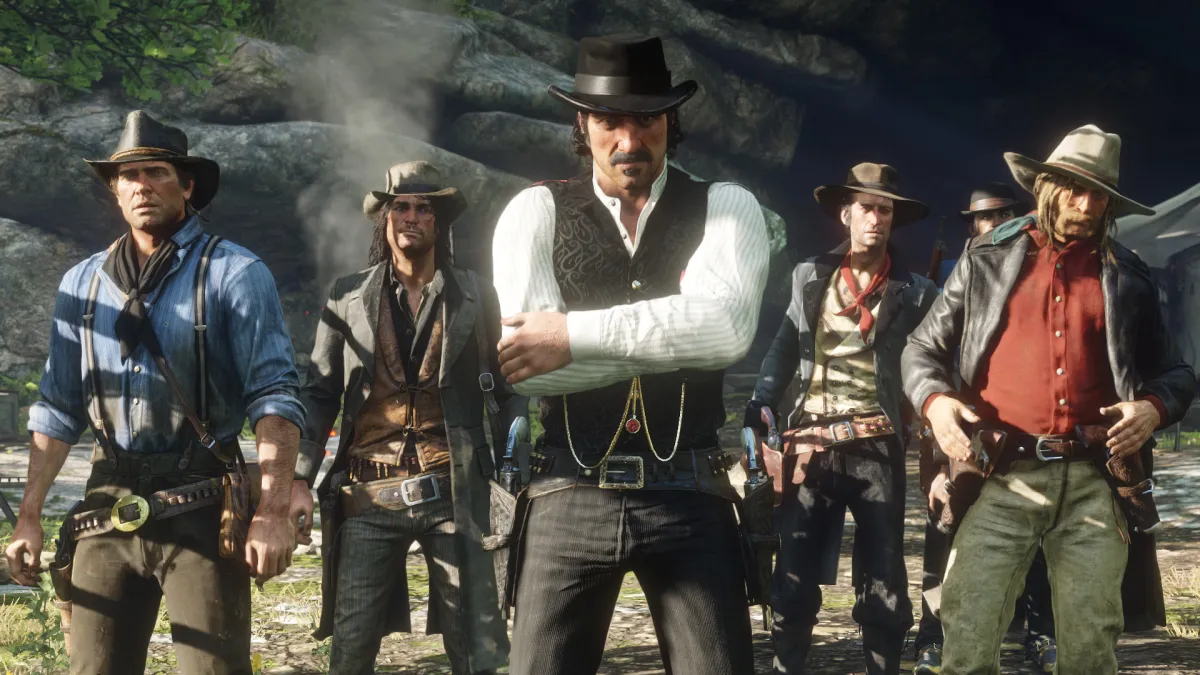 Photo: Red Dead Redemption 2, via variety.com
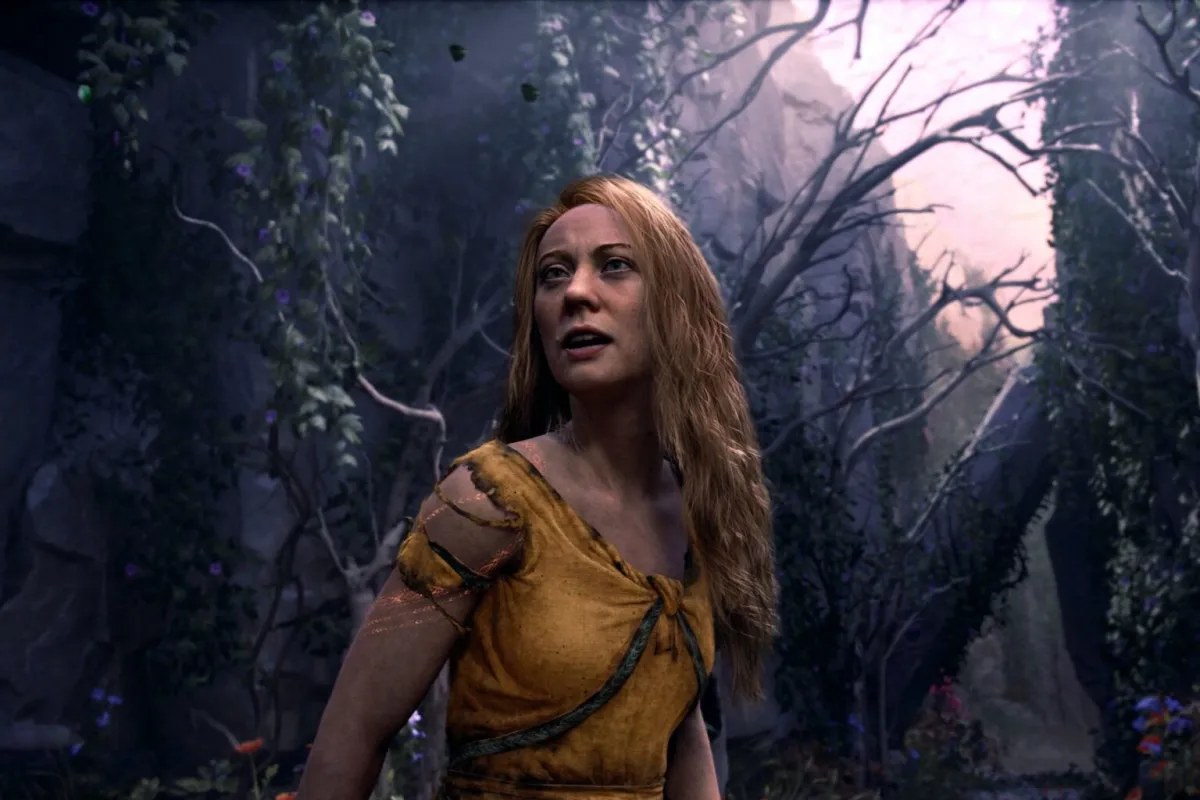 Photo: God of War, via thephrasemaker.com
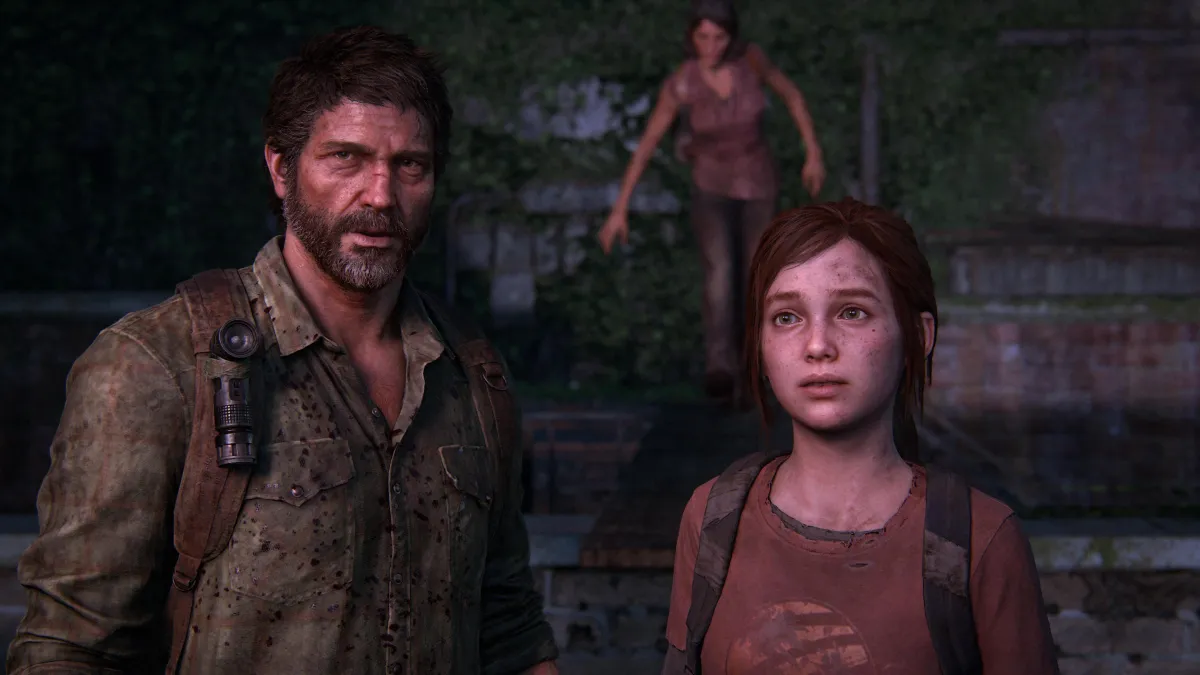 Photo: The Last of Us, via cdn.mos.cms.futurecdn.net
The commercial and critical success of those titles sent a clear signal up the industry food chain: cinematic production value is a competitive differentiator. It attracts broader audiences, generates mainstream media coverage, wins awards, and positions games as cultural artifacts rather than entertainment products. For publishers operating at the top of the market, the prestige TV comparison stopped being an aspiration and became a benchmark.
The problem is that prestige TV and video games are fundamentally different relationships between audience and content. A viewer of a prestige drama is passive — the pacing, the structure, the emotional beats are all controlled by the creators. A game player is active, and that activity creates a constant implicit negotiation between what the player wants to do and what the game is asking them to watch. When that negotiation breaks down — when the player is ready to play and the game is still talking — the skip button is the player's way of reasserting control.
Studios that built their reputations on cinematic storytelling understand this tension better than anyone. The best of them have developed sophisticated techniques for keeping players inside narrative moments: integrating story beats into gameplay, giving players agency within cutscenes, using environmental storytelling to carry narrative weight without interrupting flow. But those techniques are expensive, difficult, and require the kind of tight integration between narrative and design teams that large studios — with their separated departments and long production timelines — often struggle to achieve consistently.
The Engagement Illusion
There's a version of this conversation that studios sometimes deploy as a defense: completion rates. If a player finishes the game, the argument goes, they engaged with the story at some level, even if they skipped individual scenes. The narrative landed. The investment was justified.
This argument is weaker than it sounds. Completion data doesn't distinguish between a player who was moved by every story beat and a player who skipped every cutscene, read none of the lore entries, and finished the game purely for the gameplay loop. And for a significant portion of the player base — particularly on platforms where achievement completion and trophy hunting are cultural practices — finishing the game has essentially no relationship to engagement with its story.
There's also the question of what "story engagement" actually means in games that have absorbed the prestige TV model. When studios talk about their narrative ambitions, they often describe emotional arcs, thematic depth, character development — the vocabulary of literary and dramatic criticism. But if a substantial share of players experience none of those things because they're skipping the delivery mechanism, the ambition exists in a strange kind of isolation. The story was told. It just wasn't received.
What Players Are Actually Saying
Player behavior data is one thing. What players say about cutscenes — on Reddit, in reviews, in the comments sections of YouTube critiques — is another, and the two aren't always aligned. Players who skip cutscenes often express genuine interest in a game's story; they just prefer to engage with it on their own terms, through wikis, YouTube lore summaries, and community discussions rather than through the in-game presentation.
This is a genuinely new kind of storytelling relationship, and the industry hasn't fully come to terms with it. The assumption embedded in prestige cinematic game design is that the intended delivery mechanism — the cutscene, the performance capture, the orchestral score — is the story. But for a growing portion of the audience, the story is the raw material, and they'll extract it through whatever channel is most efficient for them. The cutscene is optional. The lore is not.
That's not a failure of player attention spans, whatever the hot take of the month suggests. It's a signal about how storytelling needs to evolve in a medium where the audience has a skip button and isn't shy about using it.
The Studios That Are Adapting
The most interesting responses to this tension aren't coming from the biggest studios — they're coming from the mid-tier and independent developers who can't afford to absorb the cost of skipped cinematic investment and are therefore building narrative systems that don't rely on the player sitting still.
Environmental storytelling, systemic narrative, dialogue systems that reward exploration rather than passive watching — these approaches have been around for decades, but they're being refined and elevated in ways that feel genuinely responsive to how modern players actually behave. The studios doing this well aren't abandoning story. They're finding ways to tell it that work even when the player never stops moving.
The bigger studios will get there eventually. The economics will force the conversation if the creative instinct doesn't. But right now, there's a gap between what the industry is building and what its audience is willing to sit through — and the skip button is the most honest piece of feedback in the room.
Someone should probably start listening to it.
The scene was beautiful. The player hit skip. Both things can be true — but only one of them is costing you money.