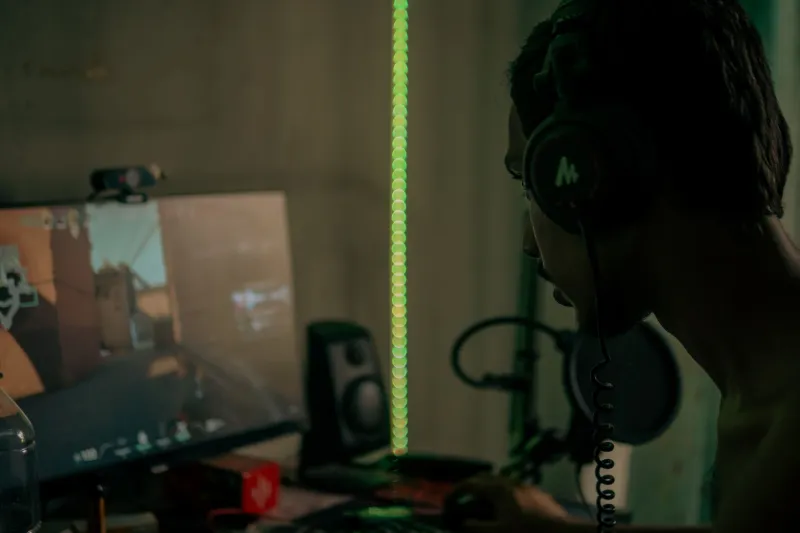
The Shadow Drop Gamble: Why More Publishers Are Skipping Hype Cycles and Launching Games With Zero Warning

At 2 PM on a random Tuesday in March, Quantum Echoes simply appeared on every digital storefront. No pre-orders, no review embargoes, no months-long marketing campaign building hype. Just a brief trailer, some screenshots, and a "buy now" button. By Friday, it had sold 500,000 copies and dominated gaming Twitter for a week straight.
Welcome to the shadow drop era, where the biggest surprise in gaming isn't what gets announced — it's what launches without any announcement at all.
In 2026, we've seen more significant shadow drops than any year in gaming history. Publishers are increasingly betting that the element of surprise can cut through market noise better than traditional marketing blitzes. But is this trend actually pro-consumer, or just a sophisticated way to avoid the scrutiny that comes with normal launch cycles?
The Numbers Behind the Strategy
Quantum Echoes wasn't a fluke. Neon Dreams, Fractured Reality, and The Last Station all shadow-dropped in the past six months, and all significantly outperformed their publishers' internal projections. When Neon Dreams appeared on Game Pass and PlayStation Plus simultaneously with zero warning, it racked up 2 million downloads in its first week.
 Photo: Game Pass, via static0.gamerantimages.com
 Photo: PlayStation Plus, via static1.dualshockersimages.com
The traditional wisdom says games need months of marketing buildup to succeed. Shadow drops are proving that wrong, at least for certain types of games. Mid-budget titles with strong visual hooks and clear gameplay concepts seem particularly suited to surprise launches.
But there's a darker side to these numbers. Games that shadow drop also avoid the traditional review cycle entirely. Quantum Echoes launched without a single professional review, relying entirely on word-of-mouth and streamer coverage to build its reputation. That's either refreshingly honest or deeply suspicious, depending on your perspective.
The Hype Cycle Backlash
To understand why shadow drops are becoming popular, you need to understand how broken traditional game marketing has become. The standard playbook — announce at a showcase, release trailers every few months, build to a crescendo of pre-orders and day-one sales — is producing diminishing returns.
Gamers are increasingly skeptical of pre-rendered trailers and carefully curated gameplay demos. They've been burned too many times by games that looked incredible in marketing but fell apart at launch. The hype cycle has become a liability rather than an asset.
Shadow drops sidestep this entire problem. When a game appears fully formed and immediately playable, there's no time for expectations to build beyond what the game can actually deliver. Players judge the final product, not the promise.
Nintendo's Influence
Nintendo deserves credit (or blame) for normalizing the shadow drop strategy. Their surprise releases of games like Apex Legends on Switch and various indie titles have shown that major announcements don't always need major lead times.
But Nintendo's shadow drops work because they're Nintendo. They have a captive audience that pays attention to every Direct presentation and trusts the company's curation. When Nintendo says "this game is available right now," millions of players listen.
Other publishers trying to replicate this strategy don't have the same built-in audience or brand trust. Their shadow drops need to work harder to cut through the noise, which is why we're seeing increasingly elaborate "surprise" marketing campaigns that aren't really surprises at all.
The Review Problem
Here's where shadow drops get ethically murky. Traditional release cycles give professional reviewers weeks or months to properly evaluate games before launch. Shadow drops compress that timeline to zero, meaning early impressions come from streamers, content creators, and social media rather than traditional critics.
This isn't necessarily bad — streamers and social media often provide more authentic reactions than formal reviews. But it does mean that games with serious technical problems or predatory monetization can gain significant traction before the issues become widely known.
Fractured Reality is a perfect example. It shadow-dropped to immediate praise for its innovative mechanics and striking art style. Only after thousands of players had purchased it did the community discover that the game's progression system was designed to push players toward expensive microtransactions.
A traditional review cycle might have caught this problem. The shadow drop strategy buried it until it was too late for many buyers.
The Streaming Lottery
Shadow drops live or die based on whether they catch the attention of major streamers and content creators. A single stream from a popular creator can make or break a surprise launch, creating a high-stakes lottery system that traditional marketing doesn't have to deal with.
The Last Station got incredibly lucky when three major streamers happened to discover it within hours of its shadow drop. Their combined audiences of millions turned what could have been a quiet indie release into a viral sensation.
But for every Last Station, there's a game like Echo Chamber — a perfectly competent puzzle platformer that shadow-dropped into complete obscurity because no major creators noticed it. It sold fewer than 1,000 copies in its first month, despite being objectively better than several games that became shadow drop success stories.
This lottery system rewards luck as much as quality, which feels fundamentally unfair to developers who put years of work into their projects.
The Authenticity Question
The most successful shadow drops feel authentic — like developers who finished their game and couldn't wait to share it with the world. But as the strategy becomes more common, we're seeing calculated "shadow drops" that are anything but spontaneous.
Some publishers are now planning elaborate fake surprise campaigns, complete with mysterious social media teasers and "leaked" information designed to build anticipation for a surprise that isn't actually surprising. It's the worst of both worlds — the manipulation of traditional marketing combined with the false authenticity of a genuine surprise.
Platform Politics
Shadow drops also reveal interesting dynamics between publishers and platform holders. Games that launch simultaneously across all platforms suggest genuine surprise releases. Games that shadow drop exclusively on one platform are usually the result of behind-the-scenes deals that are anything but spontaneous.
When Quantum Echoes appeared only on PlayStation platforms, it wasn't a creative decision — it was a business one. Sony likely paid for the exclusivity and coordinated the timing to maximize impact during a slow news cycle.
These platform-exclusive shadow drops feel less authentic because they obviously are. They're traditional marketing deals disguised as organic surprises.
The Consumer Perspective
From a player standpoint, shadow drops are mostly positive. They eliminate the anxiety of pre-orders, the disappointment of delays, and the endless speculation about whether games will live up to their marketing.
But they also eliminate consumer protections like review embargoes and advance coverage. When you buy a shadow drop, you're taking a bigger gamble than with a traditionally marketed game.
The question is whether the excitement of genuine surprises is worth the increased risk of buying games blind.
Looking Forward
Shadow drops aren't going anywhere. As traditional marketing becomes less effective and more expensive, publishers will continue experimenting with surprise launches. The challenge is maintaining the authenticity that makes shadow drops special while scaling the strategy to work for bigger, more expensive games.
The real test will come when a major AAA publisher tries to shadow drop a $200 million blockbuster. Will the surprise element be enough to overcome the lack of traditional marketing support? Or do shadow drops only work for smaller, more experimental games?
Based on 2026's track record, publishers seem willing to find out. The shadow drop gamble is paying off often enough that even traditionally conservative studios are rolling the dice.
Whether that's good for games or just good for marketing departments remains to be seen.