The Quiet Kill: How Publisher Shutdown Announcements Are Becoming Gaming's Most Ruthless PR Strategy

The Quiet Kill: How Publisher Shutdown Announcements Are Becoming Gaming's Most Ruthless PR Strategy
The email arrives on a Friday afternoon, buried beneath the excitement of a major game reveal or nestled between quarterly earnings highlights. "We are restructuring our development priorities," it reads, corporate speak for what everyone knows is coming next: another studio is about to disappear. In 2026, the gaming industry has perfected the art of the strategic shutdown announcement, turning studio closures into carefully orchestrated PR maneuvers designed to minimize damage and maximize distraction.
The Anatomy of a Calculated Closure
The pattern has become depressingly familiar. When Electronic Arts shuttered Ridgeline Games in February 2026, the announcement came packaged with the reveal of Battlefield's new live-service roadmap. When Take-Two dissolved its Austin mobile division in May, the news dropped the same day as Grand Theft Auto VI's second major trailer. These aren't coincidences—they're calculated moves by corporate communications teams who have learned to weaponize the news cycle.
"The timing is never accidental," explains former Activision communications director Sarah Chen, who left the industry in 2025 after what she describes as "too many of these conversations." "You bundle bad news with good news, or you drop it when something bigger is happening. It's PR 101, but when it's people's livelihoods, it feels particularly cruel."
 Photo: Sarah Chen, via media.karousell.com
The strategy extends beyond simple timing. Publishers have become masters of linguistic camouflage, wrapping studio closures in language about "strategic realignment," "resource optimization," and "focusing on core competencies." The human cost—hundreds of developers losing their jobs, years of creative work vanishing overnight—gets buried beneath corporate euphemisms designed to protect stock prices rather than acknowledge reality.
The Distraction Economy
The most cynical part of this strategy is how it exploits the gaming community's own enthusiasm against itself. When Microsoft announced the closure of Arkane Austin and Tango Gameworks in May 2026, the news broke during the same week as Xbox's Summer Game Fest showcase. Gaming media, already stretched thin covering major announcements, gave the closures minimal coverage compared to the flashy new trailers and release dates.
"Publishers know exactly how the news cycle works," says games industry analyst Michael Pachter. "They know that gaming websites and content creators are going to prioritize covering the exciting stuff over the depressing stuff. So they time these announcements to get lost in the shuffle."
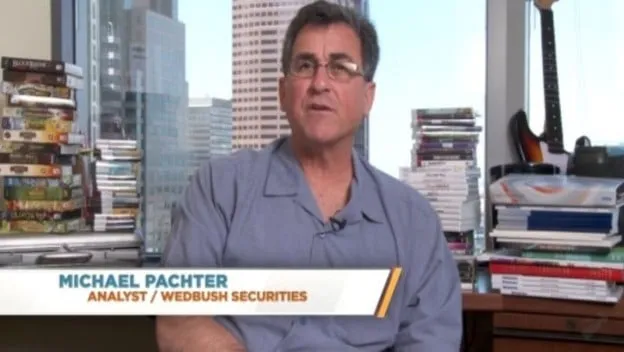 Photo: Michael Pachter, via www.cheatcc.com
The result is a form of manufactured amnesia. Studio closures that should spark industry-wide conversations about sustainability and worker protection instead become footnotes in the week's gaming news. By the time the next major announcement cycle hits, the closed studios and displaced developers are largely forgotten by everyone except those directly affected.
The Human Cost of Strategic Silence
Behind every strategically timed announcement are real people whose careers and lives are being upended. Former Volition developer Marcus Rodriguez, whose studio was shuttered by Embracer Group in August 2026 (announced, notably, during Gamescom's opening week), describes the experience as "professionally devastating but personally insulting."
 Photo: Marcus Rodriguez, via prnow.io
"They announced it like we were a quarterly expense being trimmed," Rodriguez says. "No acknowledgment of the games we'd made, the community we'd built, the years we'd put in. Just a two-paragraph press release buried under news about their latest acquisition."
The psychological impact extends beyond the immediate victims. Developers across the industry report increased anxiety about job security, with many describing a constant state of waiting for the other shoe to drop. This environment of perpetual uncertainty is affecting creative output, with developers increasingly reluctant to take risks or invest emotionally in long-term projects.
The Enablers and the Enabled
This strategy only works because the gaming ecosystem enables it. Gaming media, driven by traffic metrics and engagement algorithms, consistently prioritizes positive news over critical coverage. Social media platforms amplify exciting announcements while letting negative news sink without a trace. Even gaming communities themselves often seem more interested in discussing upcoming releases than confronting uncomfortable truths about industry practices.
"We're all complicit," admits GameSpot editor Jennifer Walsh. "We know that positive coverage gets more clicks, more engagement, more revenue. The business incentives push us toward covering what's exciting rather than what's important. It's a systemic problem that goes beyond any individual publication."
The result is an industry where publishers can make calculated decisions about when and how to destroy studios, confident that the news will be managed, minimized, and ultimately forgotten. It's a level of cynicism that would be shocking in any other entertainment industry, but in gaming, it's become standard operating procedure.
Breaking the Cycle
Some industry observers argue that this pattern is finally starting to crack. Developer advocacy groups are becoming more vocal, gaming journalism is slowly prioritizing worker-focused coverage, and even some publishers are beginning to acknowledge the reputational damage of poorly handled closures.
"The community is starting to notice," Chen observes. "When every major announcement comes with a studio closure attached, people start to see the pattern. They start asking uncomfortable questions about whether this is really necessary, or whether it's just convenient."
The question is whether this growing awareness will translate into meaningful change, or whether the industry will simply develop more sophisticated methods of managing the message. Given the financial incentives at play, the smart money might be on the latter.
In an industry that prides itself on innovation and creativity, perhaps the most damning innovation of all is how efficiently it has learned to make human suffering disappear from the conversation entirely.